
ℹ️ What Commercial Drivers Need to Know
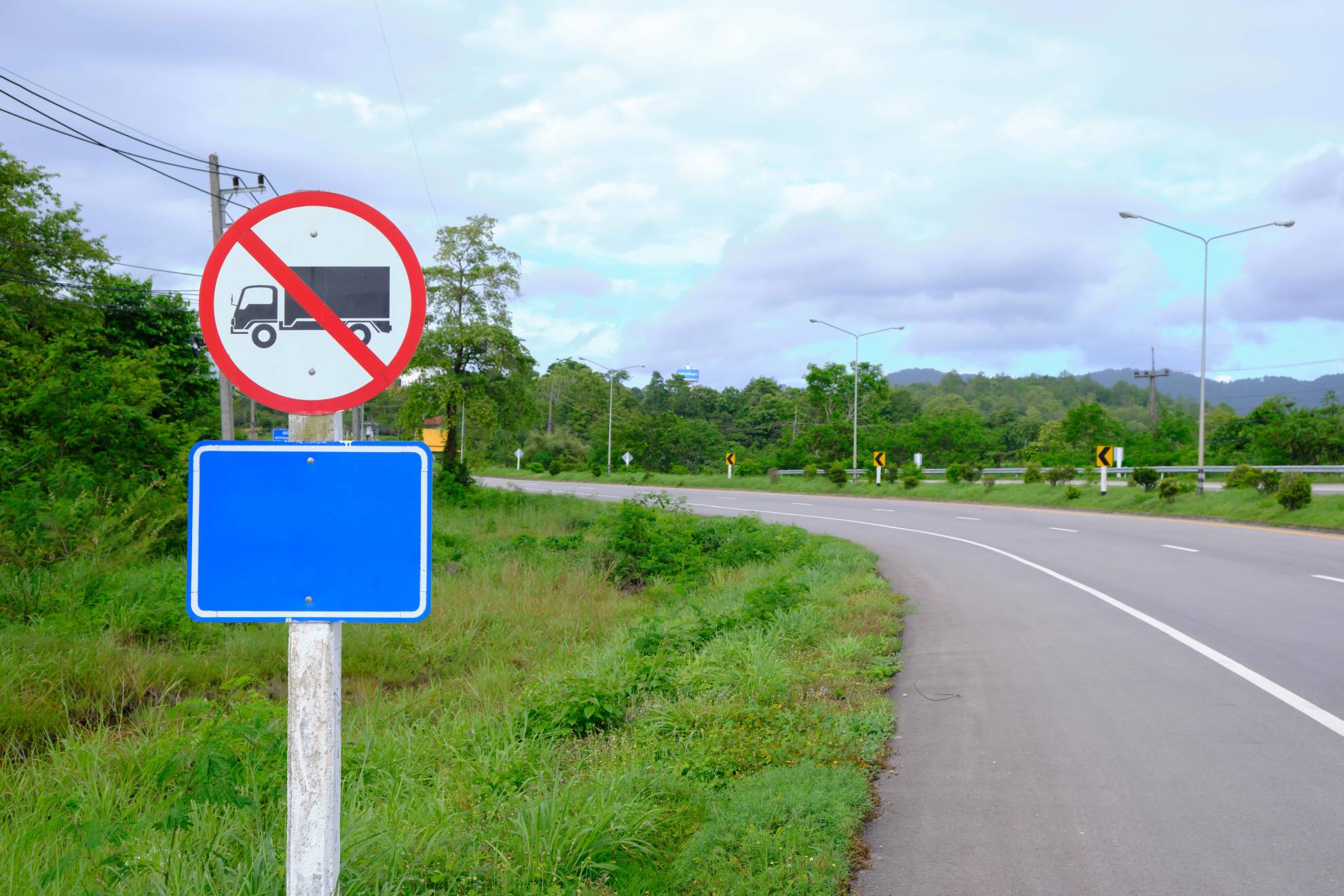
A prohibited truck route ticket in Taylor typically arises under the city’s local traffic ordinances rather than a specific Michigan Compiled Laws section. Michigan law allows municipalities to restrict the operation of heavy commercial vehicles on designated roadways. That authority comes from MCL 257.726, which permits local governments to set truck-route designations and limitations as long as they post proper signage. Because this violation originates from a local ordinance, the exact language of the offense depends on Taylor’s municipal code, but enforcement is carried out by Taylor Police and processed in the 23rd District Court.
This type of citation is classified as a civil infraction—not a misdemeanor—unless there is an accompanying allegation such as reckless operation or ignoring a lawful police order. The civil-infraction label does not mean the ticket is harmless; for commercial drivers, a prohibited-route violation can have outsized consequences.
🚚 How This Violation Usually Occurs in Taylor
Taylor has several industrial areas bordered by residential neighborhoods, as well as traffic-sensitive corridors around Telegraph Road, Ecorse Road, and the I-94/I-75 vicinity. Common scenarios include:
- A driver relying on non-commercial GPS navigation, which routes the truck down a restricted local road.
- A situation where signage is posted but partially obscured, missed, or encountered too late for a safe turn.
- Deliveries to facilities near restricted streets where the precise legal routing is not obvious.
- A detour or construction zone forcing drivers onto secondary roads without clear commercial-vehicle guidance.
Because local restrictions can change and may differ from one neighboring city to another, even experienced CDL drivers can inadvertently enter a prohibited route.
📄 Legal Elements of the Violation
To establish the offense, the city must show:
- The vehicle met the definition of a truck restricted under Taylor’s ordinance (usually based on weight, axle count, or commercial use).
- The roadway was legally designated as a prohibited truck route under municipal authority pursuant to MCL 257.726.
- Proper signs were posted in compliance with state requirements.
- The driver operated on that roadway without falling under an allowed exception, such as local deliveries where the ordinance provides a specific exemption.
Because the signage and local-delivery exceptions often become the focal point of the case, these issues are commonly raised in court.
🚗 Consequences for Non-CDL Drivers
For a typical motorist operating a pickup or light commercial vehicle, a prohibited-truck-route ticket results in:
- A civil-infraction record with the Michigan Secretary of State.
- Driver’s license points, if the ordinance mirrors a state-point-assessable offense. (Michigan’s point system is governed by MCL 257.320a, but local ordinances can carry equivalent points when they mirror a state-law counterpart. If the ordinance does not correspond to a state-point violation, the Secretary of State may not assign points.)
- Insurance impact, depending on the carrier.
The fines are set by the Taylor ordinance and the 23rd District Court’s civil-infraction schedule.
📊 CDL-Specific and FMCSA Implications
For CDL drivers, even a seemingly minor local-ordinance ticket can have federal implications because:
1. CSA / Safety Measurement System (SMS) Impact
A prohibited-route violation is typically categorized under “Compliance with Local Laws” or “Restricted Routes” in FMCSA’s Safety Measurement System. These violations can be assigned CSA severity points when cited during an inspection or crash report. Even if the ticket is issued without an inspection, it may appear in the Pre-Employment Screening Program (PSP) if associated with an officer’s report.
2. Carrier Internal Policies
Most carriers treat any routing or restricted-road violation as a preventable operational error. Consequences may include:
- Mandatory retraining
- Loss of routing or safety bonuses
- Disciplinary action for repeat issues
Future DOT Inspections
A pattern of routing violations can affect how thoroughly officers scrutinize the driver or vehicle during future roadside inspections.
Out-of-Service Status
A simple prohibited-route violation does not place a driver out of service under FMCSA regulations. OOS orders apply only to violations listed in the North American Standard Out-of-Service Criteria, and prohibited-route operation is not one of them.
The true risk is cumulative: repeated violations can harm a driver’s employability and raise a carrier’s BASIC scores.
⚖️ How the 23rd District Court (Taylor) Commonly Handles These Cases
The 23rd District Court sees a steady volume of commercial-vehicle citations because Taylor sits in a heavy-traffic corridor near major freeways. In practice:
- Negotiated reductions are often possible, especially when a commercial driver has a clean record, the signage was unclear, or the truck was legitimately attempting to reach a delivery address.
- Courts frequently consider whether the driver entered the roadway intentionally or because no safe alternative was available.
- Judges and magistrates in Taylor expect drivers to bring documentation—bills of lading, routing instructions, delivery addresses—when arguing a local-delivery exception.
- In some cases, the citation can be amended to a non-moving civil infraction, which avoids points and minimizes CDL consequences.
Because each case turns on the ordinance language, signage placement, and the driver’s purpose on the road, these cases are highly fact-specific.
📝 Next Steps for a Driver Who Received This Ticket in Taylor
A driver—especially a CDL holder—should do the following promptly:
- Document the roadway and signage as soon as possible. Photos showing obstructed or missing signs can become critical.
- Preserve delivery documentation, GPS routing, and dispatch instructions.
- Avoid paying the ticket before speaking with counsel; payment is an admission of responsibility that cannot be undone.
- Prepare for a 23rd District Court hearing, where an attorney can negotiate with city prosecutors for a reduced or amended disposition.
Commercial operators driving through Taylor face a patchwork of municipal restrictions that often conflict with real-world routing demands. When a prohibited truck route citation jeopardizes your CDL, your CSA profile, or your standing with your carrier, quick, informed action makes all the difference. An attorney experienced with Michigan commercial-vehicle defense can often mitigate the impact and protect the professional record you rely on to earn a living.